Someone on Wikipedia Has Very Strong Feelings About a Radio Station You've Never Heard Of
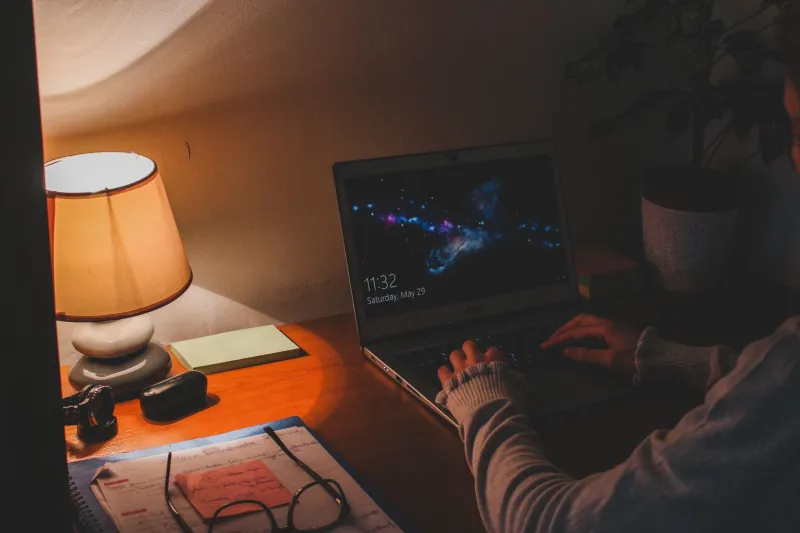
It starts innocently enough. You look up the plot of a movie you half-remember from 2003. That links to a production company. The production company links to a distributor. The distributor has a footnote about a minor antitrust case. The antitrust case mentions a telecommunications regulator. And suddenly it's 3:47 AM and you are deeply, personally invested in the history of a defunct Estonian radio station that broadcast for eleven months in 1994 and apparently meant a great deal to exactly one anonymous Wikipedia editor who goes by the handle Tallinn_FM_Forever.
Welcome to the rabbit hole. Population: you, some bots, and a rotating cast of strangers who care more about semicolon placement than you have ever cared about anything.
The Long Tail of Human Knowledge (And Its Many, Many Footnotes)
Wikipedia contains somewhere north of six million English-language articles. The famous ones — the Abraham Lincolns, the World War IIs, the Taylor Swifts — are maintained by enormous editor communities, constantly patrolled, perpetually updated, the subject of ongoing editorial governance that would make a mid-sized newspaper jealous.
But that's maybe ten thousand articles, tops. The other five-point-nine million? That's where things get genuinely strange.
Down there in the depths, you'll find articles about obscure mathematical theorems that have exactly one real-world application, articles about minor characters from 1980s British soap operas, articles about specific regional variations of a pasta shape that only exists in two villages in Calabria. These articles are complete. They have infoboxes. They have citations — sometimes dozens of them. They have talk pages where two people argued, in 2011, about whether a particular sentence constituted original research, and then apparently never spoke again.
Somebody built all of this. Somebody cared.
The Edit War as Art Form
If you've never stumbled onto a Wikipedia talk page, you are missing one of the internet's most underrated spectacles. The talk page is where editors hash out disputes before making changes to the article itself — a kind of parliamentary procedure for people who feel strongly about whether a minor-league baseball player's hometown should be listed as "Decatur" or "Decatur, Illinois."
The edit wars in niche articles have a particular flavor. They're not the big, politically charged battles over contested historical events or celebrity biographies. Those are loud and well-documented. No, the truly special edit wars happen in the quiet places, over questions that feel almost cosmically unimportant to everyone except the people fighting them.
There is a documented edit war — preserved forever in Wikipedia's revision history, which is essentially the world's most boring and also most fascinating archive — about whether a particular fictional starship from a mid-tier 1990s science fiction novel should be classified as a "destroyer" or a "heavy cruiser." This conflict spanned four years. It involved six editors. It generated over 11,000 words of discussion. The article in question has received, by most estimates, fewer than 800 total page views in its entire existence.
The math here is genuinely humbling. More words were written arguing about the article than have ever been spent reading it.
Who Are These People, Exactly?
This is the question that keeps you up at night — or keeps you up until 4 AM, which is basically the same thing when Wikipedia is involved.
The anonymous editors of hyperspecific Wikipedia articles are, by definition, difficult to profile. Some are clearly subject-matter experts: academics, hobbyists, retired professionals who spent forty years in a particular industry and now want the internet to have accurate information about it. Some are enthusiasts of a very particular stripe — the kind of person who doesn't just love narrow-gauge railroads, they love one specific narrow-gauge railroad that operated in rural Colorado between 1887 and 1912.
And some of them are, based on available evidence, simply people who found a stub article about something obscure and felt a profound moral obligation to fix it. They added a sentence. Then another. They found a source. They found a better source. They formatted the citations correctly. They uploaded a public-domain photograph. They checked back six months later to make sure nobody had vandalized it. They are, in the most literal sense possible, the custodians of knowledge that no institution asked them to preserve.
Wikipedia calls them editors. The rest of us should probably call them something closer to saints, or at minimum, very dedicated weirdos, which is basically the same thing.
The 3 AM Algorithm Nobody Programmed
There's a reason these rabbit holes tend to swallow you whole at odd hours. Wikipedia, unlike almost every other major platform on the internet, has no recommendation engine. There is no algorithm deciding what you should read next, no engagement-optimization system nudging you toward content that will keep you scrolling. The only thing pulling you deeper is the hyperlink — the oldest, purest unit of internet navigation, a simple blue word that says there is more, if you want it.
At 3 AM, when your defenses are down and your sense of what constitutes a reasonable use of your time has completely collapsed, the hyperlink becomes irresistible. You follow it. And then you follow the next one. And somewhere around the fourth or fifth click, you end up reading a thoroughly sourced, carefully maintained, 2,400-word article about a mathematical concept called a "Szemerédi regularity lemma" that you will never use, never fully understand, and somehow find completely captivating.
This is not an accident. This is Wikipedia working exactly as intended.
The Unfindable Quality of Niche Knowledge
Here's the thing about these obscure Wikipedia articles that nobody talks about: they are, in a meaningful sense, harder to find than almost anything else on the internet. Not because they're hidden — they're right there, publicly indexed, freely accessible. But because they exist in a part of the web that the algorithm never surfaces, the search engine rarely prioritizes, and the social media share never reaches.
The only way to find them is to go looking. To follow the links. To let curiosity pull you sideways through the encyclopedia's enormous, unruly interior until you arrive somewhere genuinely unexpected.
Which is, when you think about it, the best possible reason to stay up until 4 AM on a Tuesday.
Tallinn_FM_Forever, wherever you are: your work is not going unnoticed. At least not by us.